
Culture
Celebrations in Costa Rica: calendar, meaning and practical advice
A guide to Costa Rica's civic, religious, community, Afro-descendant and Indigenous celebrations and respectful participation.
Costa Rican celebrations bring together historical memory, faith, music, food, community organization and regional identity. Some have a national date; others follow a community, parish or Indigenous calendar. Use this guide for context, but confirm schedules, routes and activities each year.
January to March: dry-season gatherings
The first months coincide with the dry season across much of the Pacific and Central Valley, concentrating fairs and outdoor events. Palmares and Santa Cruz host well-known festivities, but each locality sets its own programme.
Community fairs and patron-saint festivals may include food, games, stalls, music, parades, religious activities and fundraising. There is no single format; dates depend on the patron saint, parish and local organization.
March also brings celebrations of oxherding and the painted oxcart, including gatherings and parades. Once an agricultural transport tool, the painted oxcart became a cultural symbol; the tradition is inscribed by UNESCO as intangible cultural heritage.
April 11: remembering the National Campaign
Juan Santamaría Day recalls the 1856 Battle of Rivas during the Central American campaign against the filibusters. Schools and institutions hold civic events, music and performances. The date is best understood within a regional Central American process, not only an individual heroic story.
July 25: Annexation of the Partido of Nicoya
This date commemorates the Partido of Nicoya joining Costa Rica in 1824. It is particularly significant in Guanacaste, with civic ceremonies, music, dancing, food and activities connected to regional identity.
The phrase “de la patria por nuestra voluntad” is central to the civic narrative, but understanding the celebration also means learning about the political context of 1824 and the historical diversity of Guanacaste’s communities.
Late July and August 2: the Romería
People from across Costa Rica walk to the Basilica of Our Lady of the Angels in Cartago. The pilgrimage may express faith, a promise, gratitude, family tradition or a personal experience.
Respect those participating. Road closures, diversions, crowds and special operations affect travel. Check traffic, emergency and organizer guidance before setting out.
August 31: Afro-Costa Rican culture
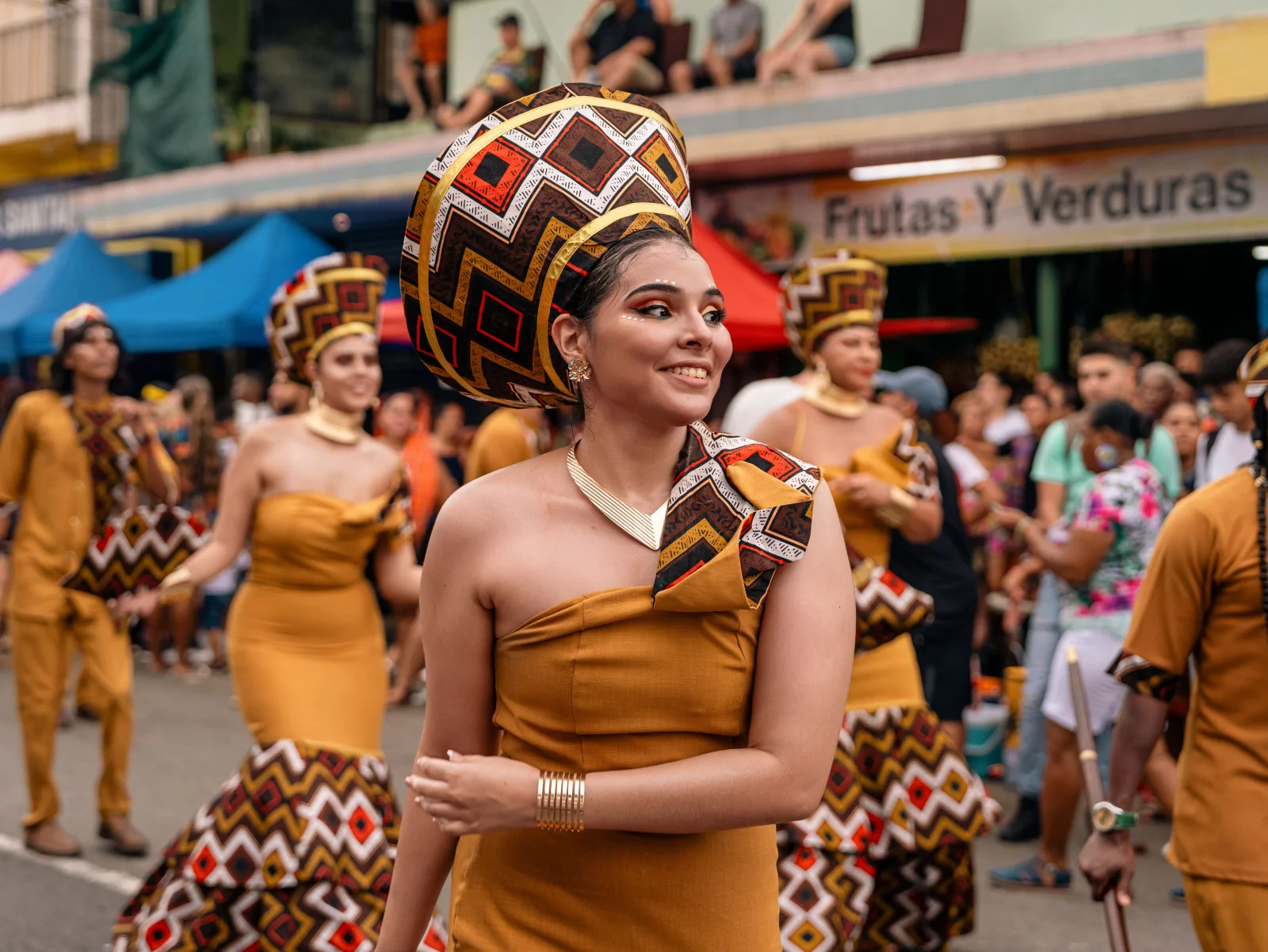
Black People and Afro-Costa Rican Culture Day recognizes contributions fundamental to national history and culture. Limón commonly hosts parades, comparsas, music, food, educational activities and community gatherings, though programmes change.
This is more than a tourist spectacle. It is a commemoration connected to memory, citizenship, resistance to racism and cultural affirmation.
September 14 and 15: Independence
Lantern parades take place on September 14, while the Central American Independence Torch travels through the region in relays. September 15 brings civic ceremonies and student parades.
Central American independence was a complex political process. Today’s torch, lanterns, anthems and parades developed later as practices of civic education and memory.
Check road closures, prepare for sun or rain and avoid blocking students and bands along parade routes.
October: masquerades and community heritage
October 31 is the National Day of the Traditional Costa Rican Masquerade. Masquerades and cimarrona bands also appear throughout the year. Giants, devils, skulls and popular characters reflect the work of craft families and local traditions.
Support the practice by recognizing mask makers and choosing activities connected to the communities themselves.
December: tamales and year-end traditions
December combines religious practices, family gatherings and public celebrations. Group tamale-making divides work among relatives and friends; recipes and wrapping methods vary by household and region.
Nativity scenes, processions, prayers, concerts, light festivals, horse parades and year-end festivities may also take place. Large events can move or be cancelled, so do not rely solely on previous years’ calendars.
Indigenous celebrations
Each Indigenous people has distinct calendars and practices. The Juego de los Diablitos in Brunca communities expresses resistance, memory and identity and takes place at different times in Boruca and Rey Curré. It does not represent every Indigenous people.
Before visiting:
- Use information published by the community itself.
- Confirm whether visitors are welcome.
- Ask before photographing, recording or flying a drone.
- Respect restrictions around spaces, ceremonies and beverages.
- Buy directly from community businesses and artists.
Plan without losing context
Treat official calendars as a starting point, not a guarantee. Reconfirm date, time, access, transport, weather and safety shortly before attending. At religious, Indigenous or memorial events, observe first and never interrupt people for a photograph.
Sources and further reading
- Ministry of Culture and Youth: Independence celebrations
- National Museum: Brunca Memory and Juego de los Diablitos
- Ministry of Culture and Youth: National Calypso Day
- UNESCO: oxherding and oxcart traditions
Important: Costa Rica Hub does not present this as a live annual events calendar. Always confirm programmes with municipalities, associations, communities and organizing institutions.