
Your data remains only in this browser.

My local profile

0Favorites0Visited0Want to visit0My itineraries

Preferences

Topics you are interested in

Recommended for you

Destinations related to your interests that you have not marked yet.

♡ Favorites

    ✓ Visited

      + Want to visit

          Take your profile to another device

          Download a JSON copy or import one created by Costa Rica Hub.

          This profile does not create an account, is not sent to Costa Rica Hub and may disappear if you clear browser data.

          Costa Rica Hub

          Search Costa Rica Hub

          Enter at least 2 characters to search guides, destinations, tools and articles.
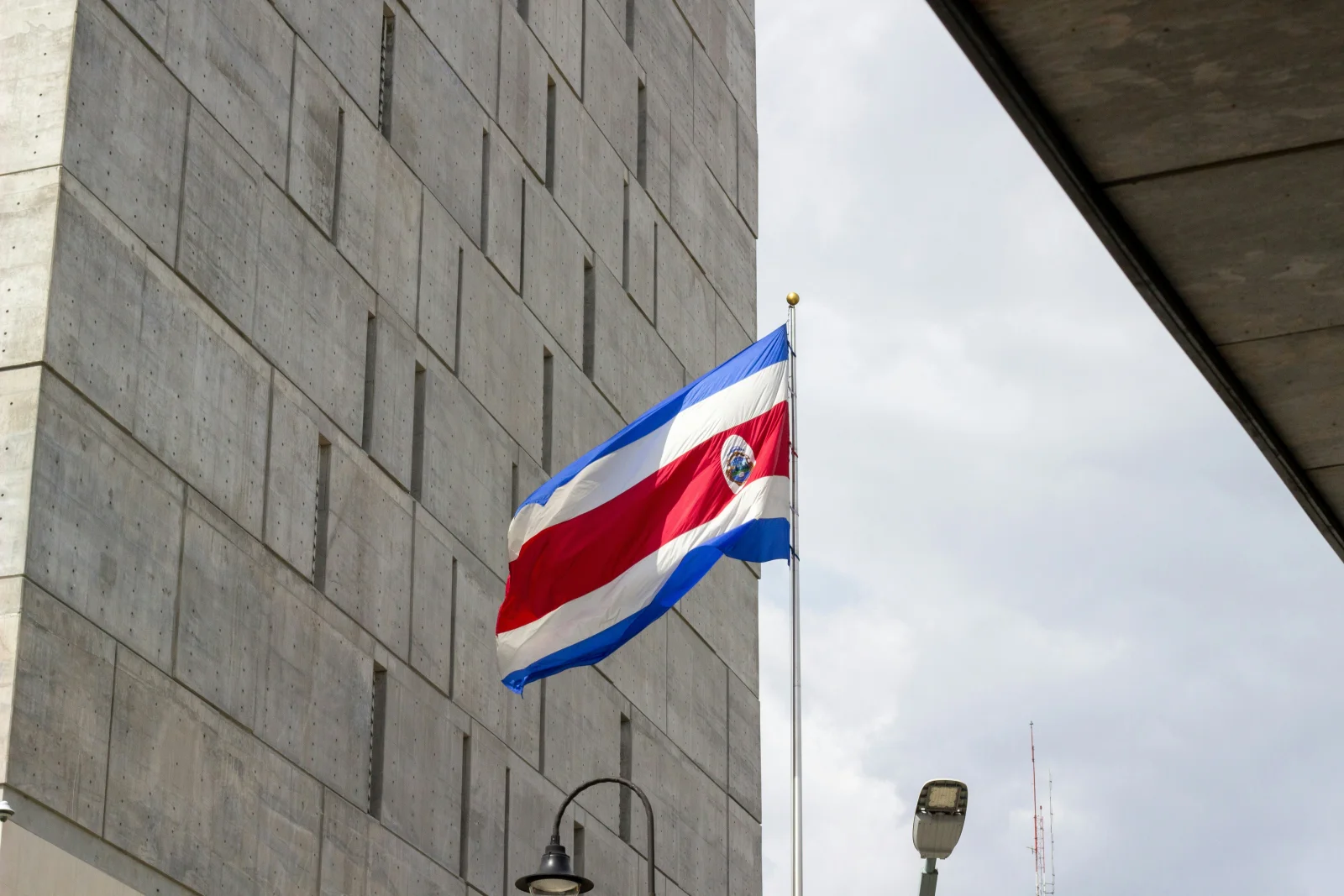
            Costa Rican flag and historical heritage

            Memory, identity and change

            History of Costa Rica

            A clear, contextual journey through Costa Rican history, from Indigenous societies to the contemporary country.

            A plural historyHistorical processes do not have a single voice. This overview links to sources for exploring more perspectives, regions and communities.

            How to read this timeline

            Eight periods for orientation, not eight sealed compartments

            Dates provide orientation, but social changes overlap. Everyday life, economic relationships and identities do not transform overnight. Each section summarizes broad processes and identifies connections that continue into the present.

            For at least 12,000 years

            Deep history and Indigenous peoples

            The history of this territory began thousands of years before Costa Rica existed as a country. Hunter-gatherer communities gradually developed agriculture, permanent settlements and chiefdoms connected through exchange networks.

            • Corn, cassava, beans and other crops transformed food, settlement and social organization.
            • Archaeology identifies relationships with both Mesoamerica and the Isthmo-Colombian Area; this was a zone of connection rather than an empty cultural frontier.
            • Pottery, carved stone, metallurgy and the Diquís stone spheres reveal specialized knowledge and complex societies.
            Why it matters

            Bribri, Cabécar, Maleku, Brunca, Ngäbe, Brörán, Chorotega and Huetar are living peoples. Their history did not end with European arrival and their diversity cannot be reduced to archaeological objects.

            Sixteenth century–1821

            Conquest and colonial society

            Incorporation into the Spanish Empire was violent and unequal. Warfare, forced labour, displacement and disease caused a demographic catastrophe among Indigenous societies.

            • Cartago became the colonial political centre, although broad regions retained their own dynamics and Indigenous resistance.
            • The economy combined subsistence agriculture, cattle, cacao from Matina, tobacco and limited commercial circuits.
            • Indigenous, European and African people and their descendants formed a diverse society marked by legal, racial and economic hierarchies.
            Why it matters

            The idea of a uniformly isolated and impoverished colony is an oversimplification. Regions differed, links extended into the Caribbean and Nicaragua, and slavery, cultural mixture, resistance and distinct community experiences all shaped the period.

            1821–1848

            Independence and the search for a state

            Independence was not one isolated local event. The Central American declaration of September 15, 1821 arrived by post; Cartago’s council adopted decisions on October 29 and communities debated which political arrangement to follow.

            • The December 1821 Pact of Concord served as the first provisional constitution.
            • Conflict among cities and political projects culminated at Ochomogo in 1823, after which San José consolidated its political role.
            • The Partido of Nicoya chose annexation to Costa Rica in 1824 through a process involving local decisions and later ratification.
            Why it matters

            Costa Rica belonged to the Federal Republic of Central America before declaring itself a republic in 1848. State-building was gradual, contested and closely linked to the rest of Central America.

            1840s–1860s

            Coffee, sovereignty and the National Campaign

            Coffee expansion connected the Central Valley with international markets, financed roads and institutions and strengthened an export elite. Its gains and costs were distributed unequally.

            • Coffee reshaped property, credit, labour, landscapes and the growth of San José, Heredia, Alajuela and Cartago.
            • In 1856 and 1857 Costa Rica joined the Central American war against William Walker and the filibusters who had taken control of Nicaragua.
            • Santa Rosa, Rivas and the Transit Route were crucial theatres; a cholera epidemic later caused an enormous loss of life in Costa Rica.
            Why it matters

            The National Campaign consolidated sovereignty symbols such as Juan Santamaría, but understanding it also requires attention to unnamed soldiers, women, communities and the combined Central American effort.

            1870–1914

            The liberal state, railway and Caribbean

            Liberal governments centralized institutions, expanded public education and constructed a national narrative. The Atlantic railway and banana production drew the Caribbean into new global economic networks.

            • Railway construction depended on Afro-Caribbean, Chinese, Italian and Costa Rican workers, often under dangerous conditions.
            • Afro-Caribbean people, many arriving from Jamaica, created communities, churches, schools, newspapers, commerce and a culture fundamental to Limón.
            • Export expansion generated infrastructure and wealth but also concentrated power, foreign corporate control, racism and labour inequality.
            Why it matters

            The National Theatre, public schools and other liberal symbols coexisted with exclusion. National history becomes clearer when the Caribbean, Guanacaste, Indigenous territories and rural areas are no longer treated as peripheral.

            1914–1940

            Reform, conflict and social organization

            The First World War, fiscal crisis and new social demands weakened assumptions of the liberal order. Costa Rica experienced tax reform, dictatorship, labour protest and increasingly organized political participation.

            • Alfredo González Flores promoted fiscal and banking reforms before Federico Tinoco overthrew him in 1917.
            • Urban workers, artisans, teachers and banana workers organized unions, strikes and political movements; the 1934 banana strike became a defining event.
            • Women’s struggles for citizenship, education and political rights gained stronger public organization during these decades.
            Why it matters

            The reforms of the 1940s did not appear from nowhere. They followed decades of debate over taxation, working conditions, political participation, land, health and education.

            1940–1949

            Social reform, civil war and a new Constitution

            This decade combined institutional advances with extreme polarization. Costa Rica established the University of Costa Rica, the Social Security Fund, constitutional Social Guarantees and the Labour Code.

            • An alliance involving Rafael Ángel Calderón Guardia’s government, the Catholic Church and the Communist Party advanced lasting social reforms.
            • The annulment of the 1948 election triggered a civil war lasting only weeks but carrying enormous human and political consequences.
            • The governing junta abolished the army on December 1, 1948; the 1949 Constitution prohibited it as a permanent institution and recognized women’s suffrage.
            Why it matters

            Memory of 1948 remains contested. Fundamental institutions coexisted with deaths, persecution, exile and political exclusion. Women first voted in a local plebiscite in 1950 and in national elections in 1953.

            1950–present

            Democracy, welfare and new challenges

            During the second half of the twentieth century, education, healthcare, electricity and other public institutions expanded. The economy moved beyond primary dependence on agricultural exports toward industry, tourism, services and technology.

            • Electoral stability and welfare-state expansion coexisted with territorial, economic, ethnic and gender inequality.
            • The 1980s crisis brought debt, inflation, economic adjustment and lasting changes in the role of the state.
            • Environmental protection, migration, cultural diversity, human rights and living costs now occupy central places in national debate.
            Why it matters

            Costa Rica is neither a finished history nor an exceptional country without contradictions. Its institutions emerged from conflict, negotiation and social participation and continue to change under climate, fiscal, demographic and democratic pressures.

            History in place

            Where to keep learning

            Museums

            The National Museum, Jade Museum, Central Bank Museums, Juan Santamaría Historical Cultural Museum and regional museums.

            Heritage and documents

            The National Archive, monuments, historic centres, archaeological sites and digital collections make it possible to compare narratives.

            Living communities

            Indigenous, Afro-descendant, migrant, rural and urban culture is not a static exhibition. Visit respectfully and look for initiatives managed by communities themselves.