
Your data remains only in this browser.

My local profile

0Favorites0Visited0Want to visit0My itineraries

Preferences

Topics you are interested in

Recommended for you

Destinations related to your interests that you have not marked yet.

♡ Favorites

    ✓ Visited

      + Want to visit

          Take your profile to another device

          Download a JSON copy or import one created by Costa Rica Hub.

          This profile does not create an account, is not sent to Costa Rica Hub and may disappear if you clear browser data.

          Costa Rica Hub

          Search Costa Rica Hub

          Enter at least 2 characters to search guides, destinations, tools and articles.
            Costa Rican popular traditions

            Living heritage

            Traditions of Costa Rica

            A contextual guide to Costa Rican traditions, their communities, dates and respectful ways to experience them.

            A guide to understanding

            Tradition does not mean the past

            A tradition remains alive because people practise, reinterpret and transmit it. Some are national in reach; others belong to specific communities. Understanding who sustains it, what it means and how to participate respectfully matters more than seeking a folkloric postcard.

            01

            Patron-saint festivals, community fairs and civic celebrations

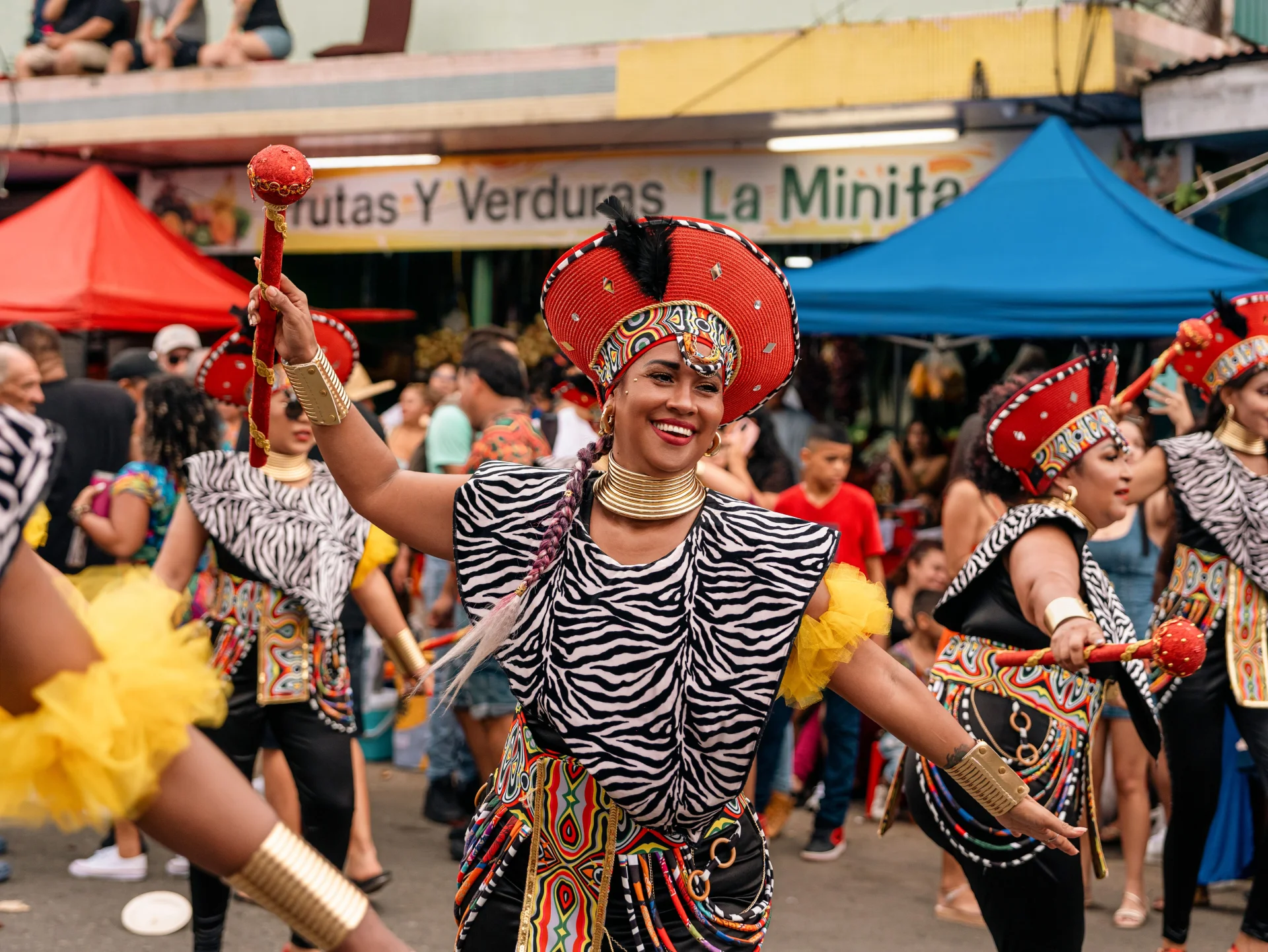
            Masquerades and cimarrona bands

            Giants, devils, skulls and popular characters move through the streets to the music of a cimarrona brass-and-percussion band. Masks are made mainly from paper, paste, fibre or resin, and each community and craftsperson contributes distinct characters and techniques.

            02

            Oxherder parades and gatherings; national celebration in March

            Oxherding and the painted oxcart

            The oxcart evolved from an essential means of transporting coffee and farm goods into an emblem of rural labour. Its painted wheels and panels developed styles associated with particular workshops, families and regions.

            03

            According to each town or parish calendar

            Community fairs and patron-saint festivals

            These fairs bring together food, music, games, stalls and fundraising activities. Although many grew around a parish or patron-saint celebration, they also function as spaces for neighbourhood organization and gathering.

            04

            Late July and August 2

            The Romería pilgrimage

            People from across the country walk to the Basilica of Our Lady of the Angels in Cartago. For participants it may represent a religious promise, a family practice, an act of gratitude or a personal experience.

            05

            Especially in December

            Christmas tamale-making

            Making tamales together matters as much as the finished dish. Families and friends divide the work of preparing corn dough and fillings, cleaning banana leaves, tying pairs and sharing recipes that have been inherited or adapted.

            06

            Festivals, cultural events and Annexation celebrations

            Bombas, marimba and Guanacaste traditions

            Guanacaste brings together marimba music, the punto guanacasteco dance, recited bombas, sabanero traditions and popular repertoires. These are living expressions with local histories, not a uniform tourist backdrop.

            07

            Everyday life and celebrations, especially around August 31

            Limón’s Afro-Caribbean culture

            Limón calypso, parade groups, cuisine, oral traditions, churches and forms of Limonese Creole English are fundamental to the country. Afro-Caribbean culture was built by communities with historic ties to Jamaica and the wider Caribbean.

            08

            Community-specific calendars and territories

            Traditions of Indigenous peoples

            Costa Rica recognizes eight Indigenous peoples, each with distinct histories, languages, knowledge and practices. Ceremonies such as the Juego de los Diablitos in Brunca communities do not represent every people and should be understood through the voices of their bearers.

            Participate respectfully

            A community is not an attraction

            • Confirm dates and conditions with organizers or local institutions; they may change each year.
            • Ask before photographing people, ceremonies, crafts in progress or community spaces.
            • Prefer guides, workshops and products managed or made by the communities themselves.
            • Avoid presenting a regional or Indigenous practice as though it represented all of Costa Rica.

            Sources and further reading

            Use these institutional and lexicographic sources for deeper context. Event dates should be confirmed before travelling.