
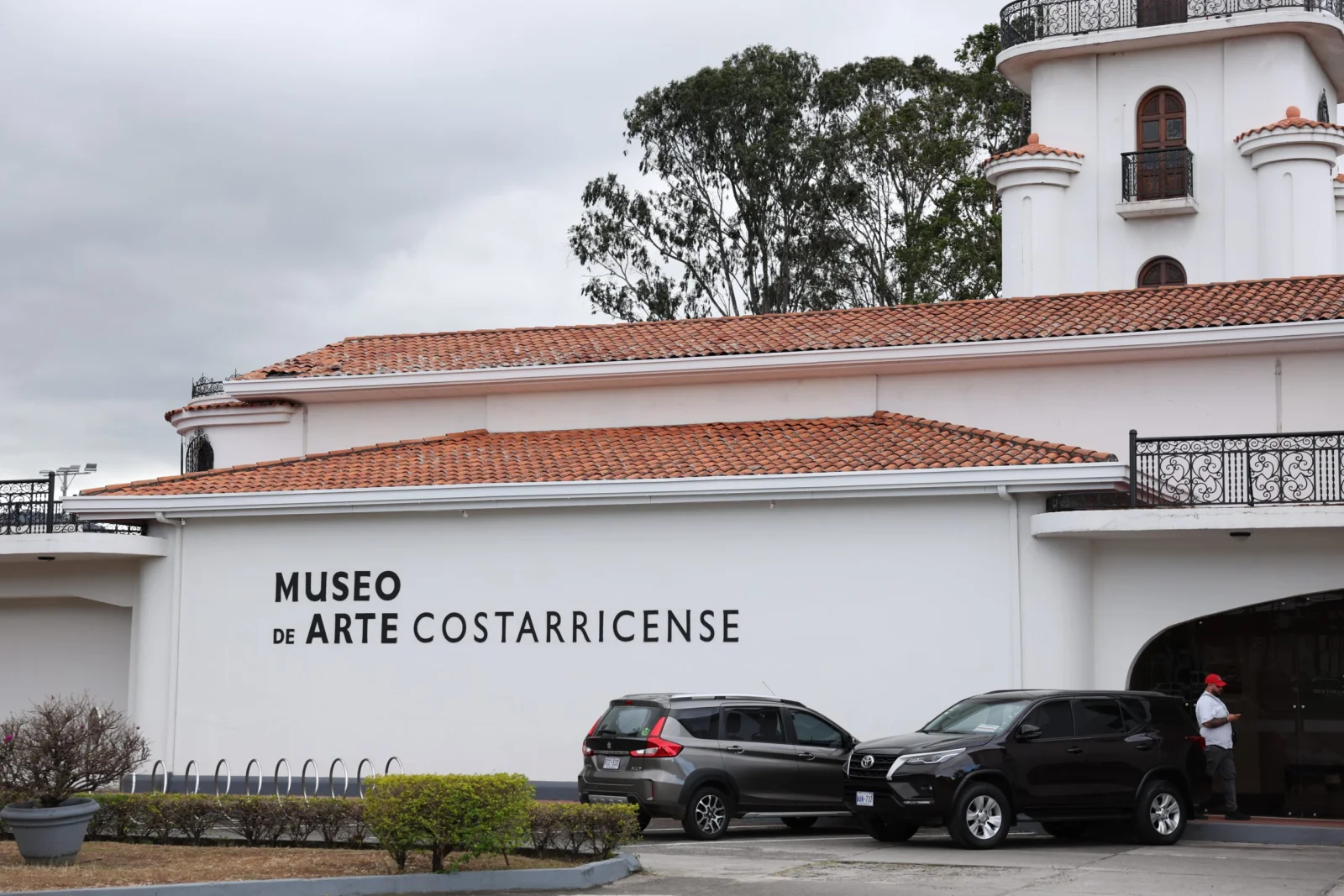
History and context
The building served as the international airport terminal from 1940 to 1955. The museum opened there in 1978, converting a neo-colonial transport landmark into a centre for Costa Rican art.
Why this place matters
The museum holds a public collection essential to understanding how artists have represented territory, society and political change. The Golden Room is itself a historic artwork embedded in the architecture.
What to notice during your visit
- Selections of Costa Rican painting, sculpture, photography and graphic art.
- The Golden Room and its visual narrative of national history.
- The Sculpture Garden and the building’s relationship with La Sabana.
How to plan your visit
- Check temporary exhibitions because visible works rotate.
- Confirm accessibility; the heritage building limits access to parts of the second floor.
- Allow unhurried time for the museum, garden and park.
Access and location
The museum stands at the eastern end of La Sabana Park. Arrive by bus, train, taxi or on foot, crossing major roads only at safe points.
Conservation and responsible visits
Keep away from artworks, avoid flash and touch no historic surface. Remain in circulation areas in the garden.
Keys to interpreting the site
How do aviation history and national art history meet?
Former terminal
Lobby, scale and relationship with La Sabana recall the museum’s earlier role as the country’s air gateway.
Artistic canon
The collection invites questions about who entered the national story, which territories were represented and which voices remained absent.
Golden Room
Its relief is a historical narrative embedded in the building and deserves critical reading rather than treatment as decoration.
Suggested visit sequence
- 01
Read the building and its former function from the entrance.
- 02
Move through permanent and temporary displays comparing periods, media and narratives.
- 03
Finish in the Golden Room and Sculpture Garden when open.
How to combine this visit
La Sabana adds an urban walk; confirm accessibility because parts of the heritage building have limitations.