
History and context
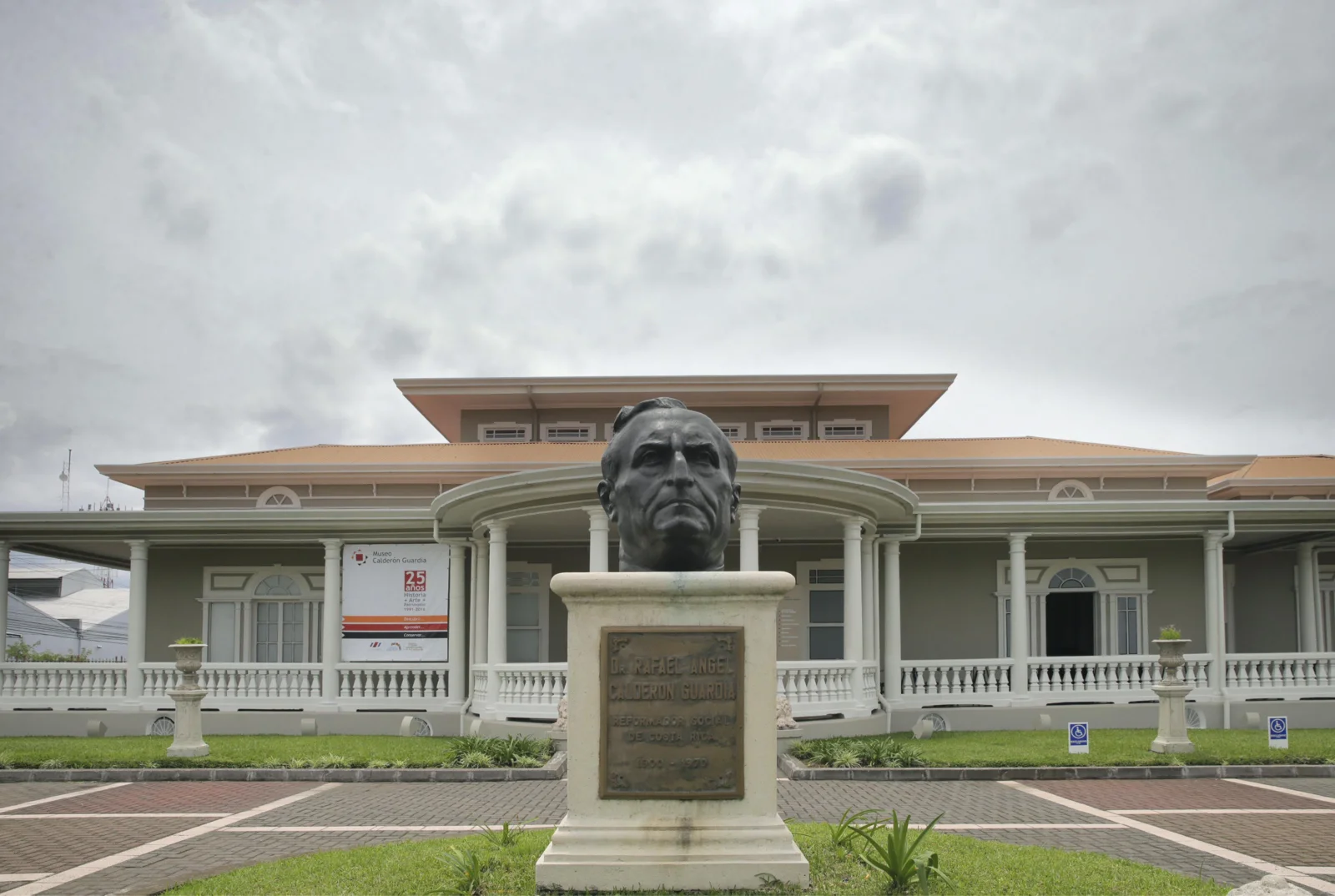
The institution was created in 1991 to preserve and study former president Rafael Ángel Calderón Guardia’s legacy. Its headquarters occupy a heritage house connected with his life and the area’s urban development.
Why this place matters
The 1940–1944 Social Reforms transformed labour, health and education. The museum places them within alliances, conflict and political memory that should not be oversimplified.
What to notice during your visit
- Galleries on Social Guarantees, the Labour Code, social security and the university.
- Objects and documents connected with Calderón Guardia.
- Domestic architecture and temporary exhibitions in the house.
How to plan your visit
- Check which historical rooms and temporary exhibitions are open.
- Confirm activities, group visits and accessibility.
- Connect the visit with other sites of political history in San José.
Access and location
The museum is in Barrio Escalante, served by buses, train and pedestrian routes. Confirm the entrance and parking options.
Conservation and responsible visits
Respect cases, documents and furniture, and approach complex political debate without confronting other visitors.
Keys to interpreting the site
How can the Social Reforms be explained without turning history into partisan tribute?
Alliances
Government, Church, labour movements and others aligned partially; recognizing them keeps a collective process from belonging to one person.
Conflict
Social guarantees, university and social security transformed Costa Rica amid disputes that deepened polarization.
House and public figure
The domestic setting brings presidential biography closer, but personal life, institution and later political memory remain distinct.
Suggested visit sequence
- 01
First establish the 1940–1944 chronology and its actors.
- 02
Compare reform, opposition and consequences through documents and objects.
- 03
Finish by reading the house as Barrio Escalante urban heritage.
How to combine this visit
Barrio Escalante and central San José extend the architecture and urban story without reducing the museum to one political reading.