
History and context
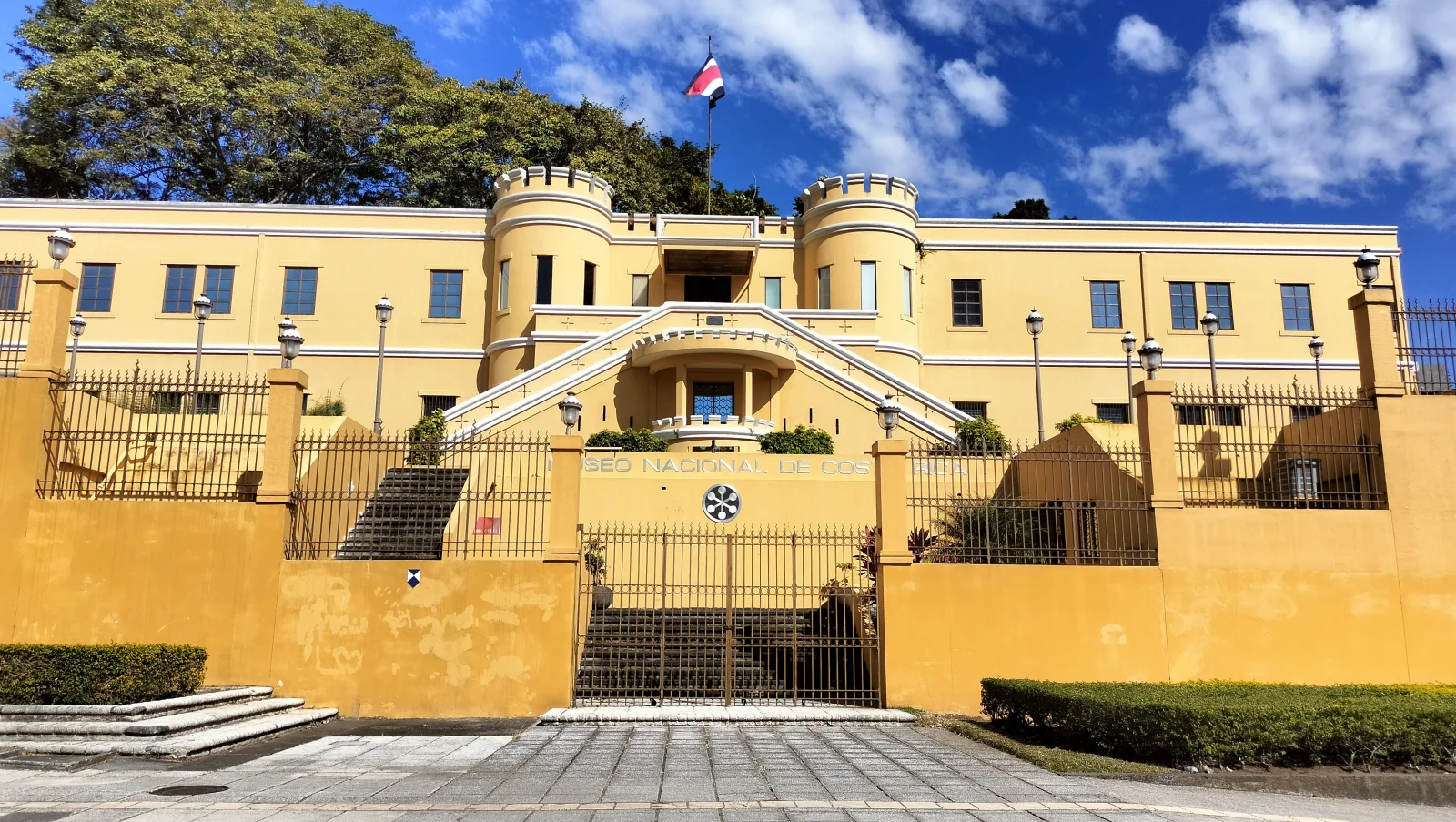
Bellavista operated as a military facility mainly during the 1920s through the 1940s. Following the 1948 Civil War and abolition of the army, the National Museum moved here in 1949. The conversion preserved cells, courtyards and bullet marks, and the building received historic-architectural heritage status in 1984.
Why this place matters
The site places two public institutions in direct contrast: barracks designed for military control and a museum devoted to research, conservation and education. Its archaeological collections are also essential for understanding the diversity of peoples and regions that long predated the Costa Rican state.
What to notice during your visit
- The sequence of pre-Columbian, colonial and republican galleries.
- Spaces from Bellavista Barracks and visible traces of the 1948 conflict.
- The butterfly garden and connections between natural and cultural history.
- Temporary exhibitions presenting current research and heritage debates.
How to plan your visit
- Check which galleries are open and whether exhibition installation affects access.
- Allow at least two hours to explore both history and archaeology.
- Combine the museum on foot with the Jade Museum, Democracy Plaza or National Park.
- Review accessibility and entry policies for groups, luggage and photography.
Access and location
The entrance is on Cuesta de Moras opposite Democracy Plaza. The museum is easy to reach on foot or by bus from central San José; nearby parking is limited.
Conservation and responsible visits
Do not touch cases, archaeological objects or barracks features. Keep a respectful distance, supervise children in gardens and follow photography restrictions displayed in each gallery.
Keys to interpreting the site
What does it mean to turn a barracks into a museum after abolishing the army?
Building as evidence
Cells, courtyards and 1948 bullet marks reveal Bellavista before a single display case is viewed.
Long histories
Archaeological collections show that the territory’s history begins neither with the Republic nor the conquest.
Selection and narrative
Every museum chooses what to preserve and how to narrate it. Compare objects, labels and silences rather than assuming neutrality.
Suggested visit sequence
- 01
Enter by observing the transition from butterfly garden to former barracks.
- 02
See pre-Columbian galleries before colonial and republican history to retain the long sequence.
- 03
Finish in courtyards and city views, relating museum, Plaza de la Democracia and downtown.
How to combine this visit
The nearby Jade Museum offers a useful comparison between two institutional presentations of the pre-Columbian past.