
History and context
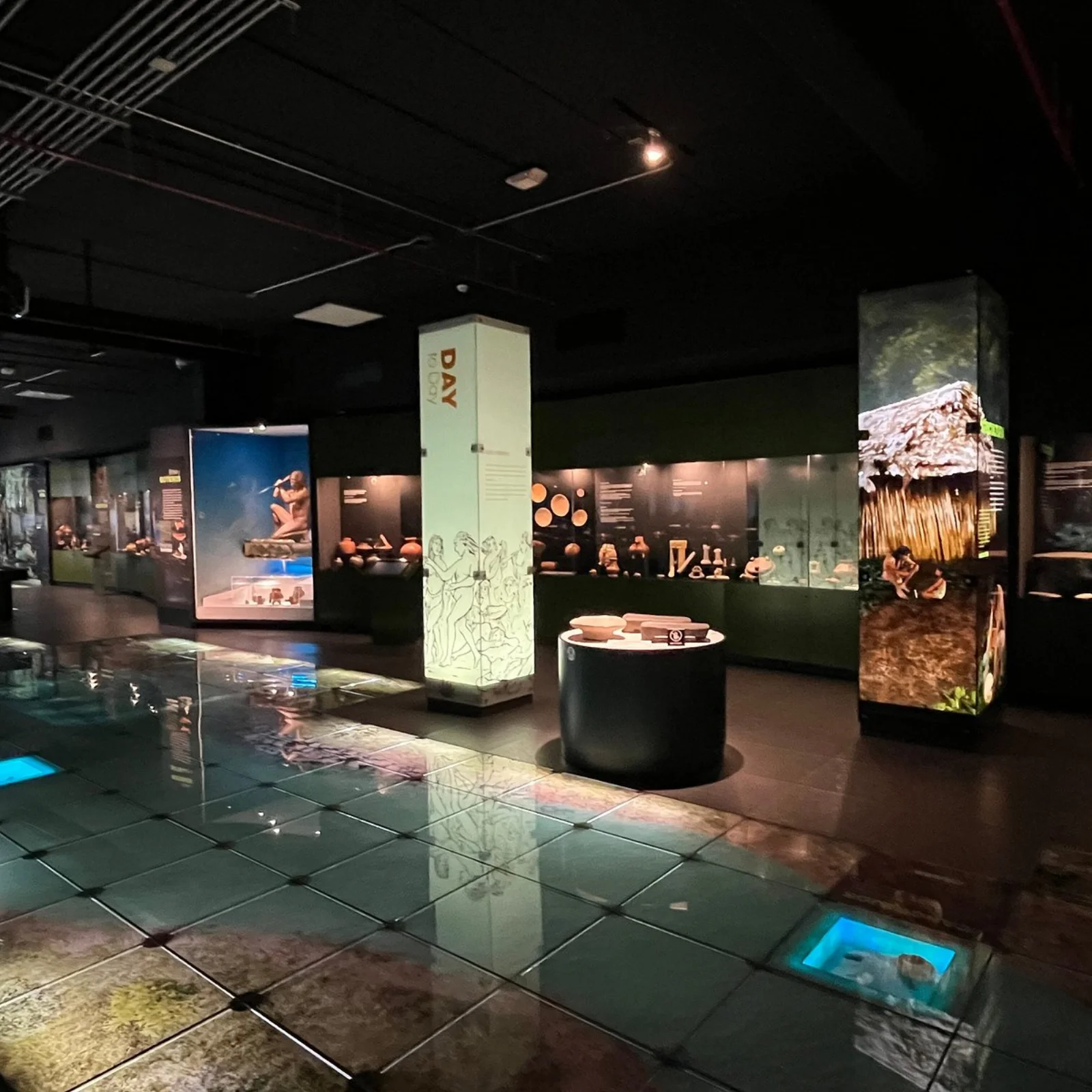
The institutional collection opened in 1977, adopted the Jade Museum name in 1979 and moved into its current building in 2014. The new space placed the objects within a wider archaeological narrative.
Why this place matters
The collection is among the region’s most important groups of pre-Columbian jade. Its deeper value lies in questions about exchange, specialized craft, identity and Indigenous memory.
What to notice during your visit
- Jadeite and other greenstone objects together with production techniques.
- Galleries exploring territory, everyday life, ritual and ancestral memory.
- Ceramics, stone and interactive resources that broaden the jade story.
How to plan your visit
- Check current temporary exhibitions and entry provisions.
- Pair the visit with the nearby National Museum.
- Follow the gallery sequence to preserve the exhibition narrative.
Access and location
The museum faces Plaza de la Democracia near the National Museum and several bus routes. It is easily reached on foot from downtown.
Conservation and responsible visits
Touch neither objects nor cases, follow photography rules and keep circulation clear. Use Indigenous names and contexts with care.
Keys to interpreting the site
Why do we call objects made from different green stones “jade”?
Material and origin
Jadeite and other rocks travelled through exchange; identifying material prevents jade from becoming a purely aesthetic label.
Specialized work
Cutting, drilling, polishing and design required time, tools and transmitted craft knowledge.
Social life
Objects make more sense alongside ceramics, stone, homes, food and ritual than as isolated jewellery.
Suggested visit sequence
- 01
Follow the five-gallery sequence to retain the narrative.
- 02
Compare greenstone objects with ceramics and stone from related contexts.
- 03
Finish by asking how the exhibition connects Indigenous past and present memory.
How to combine this visit
Pair it with the National Museum and Plaza de la Democracia, which approach archaeology through a different collection and building.