
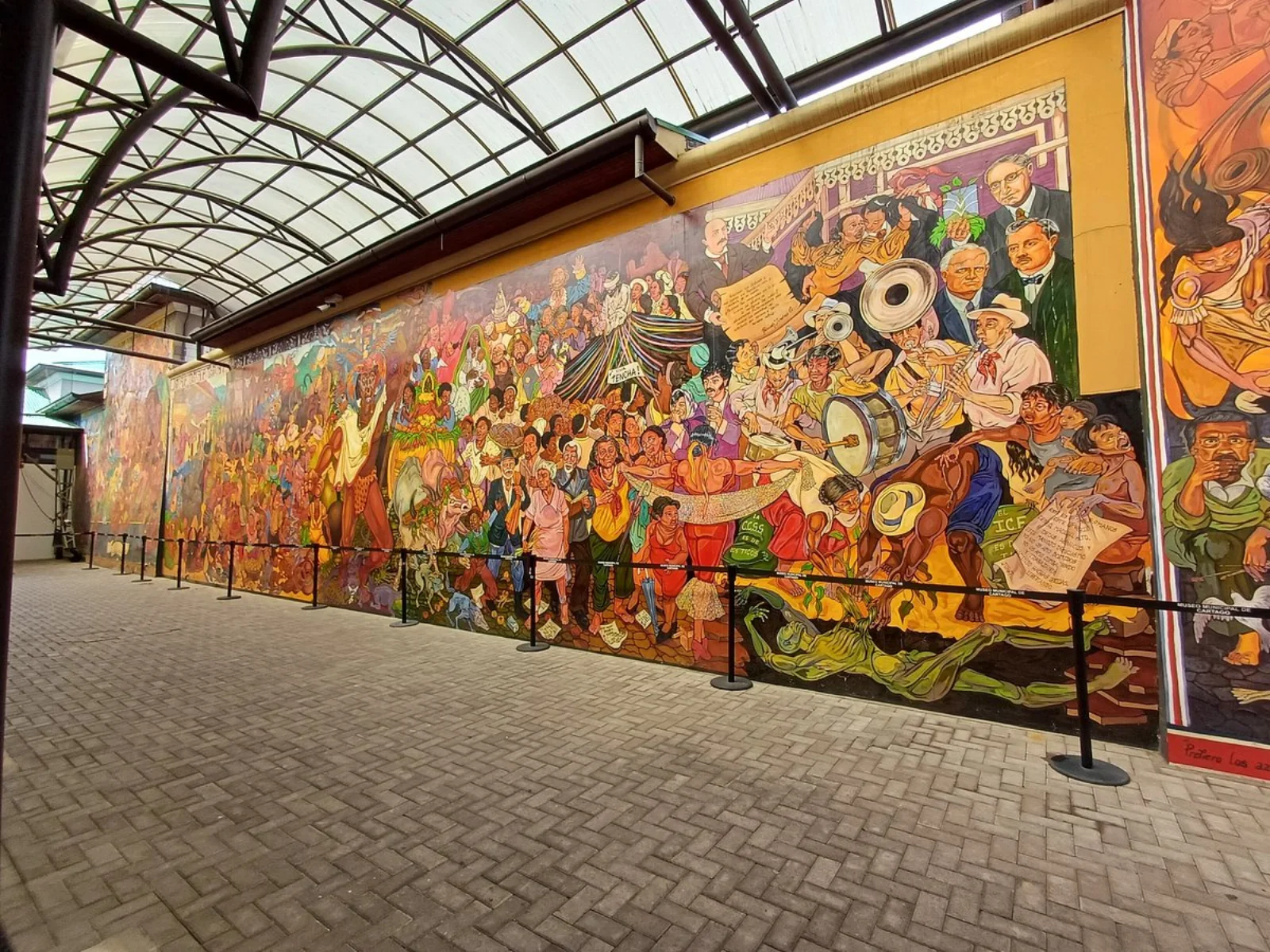
History and context
The building served as Cartago’s command post and jail before municipal restoration for cultural use. Adaptation retained elements that reveal the original organization and invite discussion of the former capital’s urban history.
Why this place matters
Reusing a prison as a museum preserves heritage without freezing it. It also raises questions about justice, authority, the city and the different memories coexisting in Cartago.
What to notice during your visit
- Courtyards, corridors and former cells incorporated into the visit.
- Exhibitions on heritage, history and local artistic creation.
- Walkable connections with other central Cartago landmarks.
How to plan your visit
- Check the municipal programme and open galleries before departure.
- Ask whether events limit courtyard or gallery access.
- Pair the museum with the Parish Ruins and nearby buildings.
Access and location
The museum is downtown and walkable from train and bus stops. Consider rain, traffic and parking.
Conservation and responsible visits
Never mark walls or doors, enter closed areas or disregard either the architecture or temporary artworks.
Keys to interpreting the site
What changes when a former jail becomes a cultural space?
Architecture of control
Courtyards, cells and circulation reveal how the building separated, watched and administered people.
Heritage reuse
Municipal adaptation does not erase the past: it transforms it for exhibitions, education and public gathering.
Former-capital history
Temporary displays belong alongside the earthquakes, rebuilding and political changes that shaped Cartago.
Suggested visit sequence
- 01
Read the façade and volume before entering.
- 02
Identify remnants of jail organization while moving through exhibitions.
- 03
Continue to the parish ruins and square to situate the museum within the city.
How to combine this visit
The nearby Santiago Apóstol ruins create a route about destruction, authority and urban reuse.