
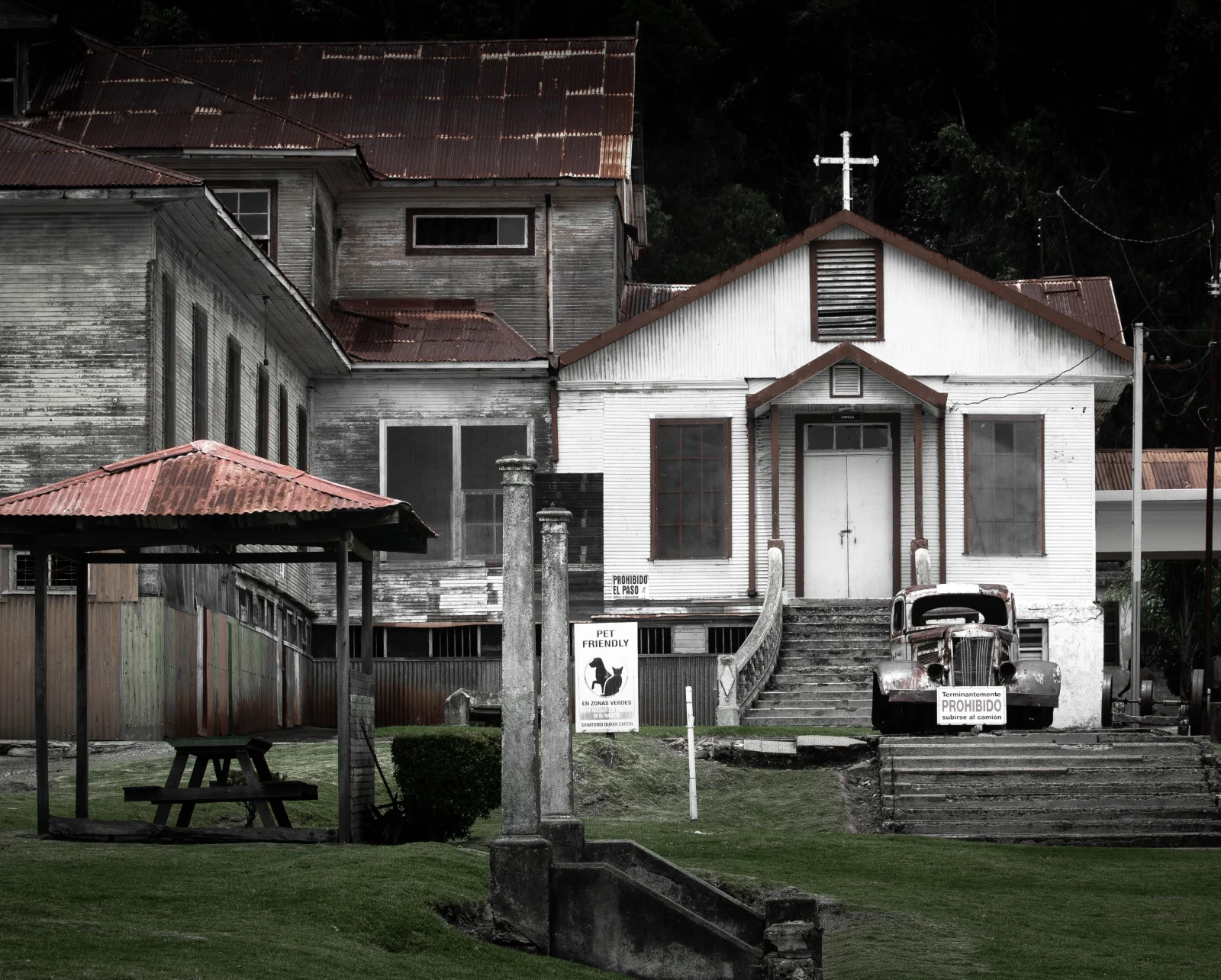
History and context
The institution began operating in 1918 through the initiative of physician and former president Carlos Durán Cartín. Its main buildings date from that period and used practical solutions for ventilation, daylight and patient separation, together with elements influenced by Victorian domestic architecture. The complex received historic-architectural heritage status in November 2014.
Why this place matters
The site documents a decisive period in Costa Rican medicine, when tuberculosis required lengthy treatment and isolation. It also preserves the stories of physicians, nurses, support staff and families, linking architecture with science, care and community memory.
What to notice during your visit
- The arrangement of wards and corridors designed for a long-stay medical institution.
- Façades, roofs and construction details associated with the early twentieth century.
- The agricultural mountain landscape that explains the choice of a cool, airy and isolated site.
- A historical reading centred on public health without turning patients’ suffering into entertainment.
How to plan your visit
- Confirm with the administration which areas are open on the day of your visit.
- Never enter closed buildings, unstable areas or spaces restricted for restoration or safety.
- Bring a warm layer and rain protection; fog, wind and rain are common at this elevation.
- Visit during daylight and allow time to read the historical interpretation available on site.
Access and location
The complex stands in Potrero Cerrado de Oreamuno, along the highland route north of Cartago. The final approach crosses a rural area, so check directions and entry conditions before leaving.
Conservation and responsible visits
This is a vulnerable heritage property: remove nothing, write on no surface and never force a door or barrier. Treat it as a former place of care and human memory, not a paranormal attraction.
Keys to interpreting the site
How did architecture turn the mountain climate into part of treatment?
Public health
Read the wards through an era when tuberculosis meant isolation, long rest, air and light before modern therapies.
Institutional life
Corridors, dormitories and services reveal patients as well as the daily work of nurses, physicians, cooks, cleaners and maintenance staff.
Memory without spectacle
Paranormal legends should not displace real experiences of illness, care, family separation and scientific change.
Suggested visit sequence
- 01
Begin with the landscape and ask why a cool, remote highland site was chosen.
- 02
Compare ward orientation, ventilation and connections without crossing barriers.
- 03
End by reconstructing the sanatorium as a care community rather than an abandoned building.
How to combine this visit
Combine it with historic Cartago or the Orosi valley in another part of the day; never improvise entry into closed buildings.