
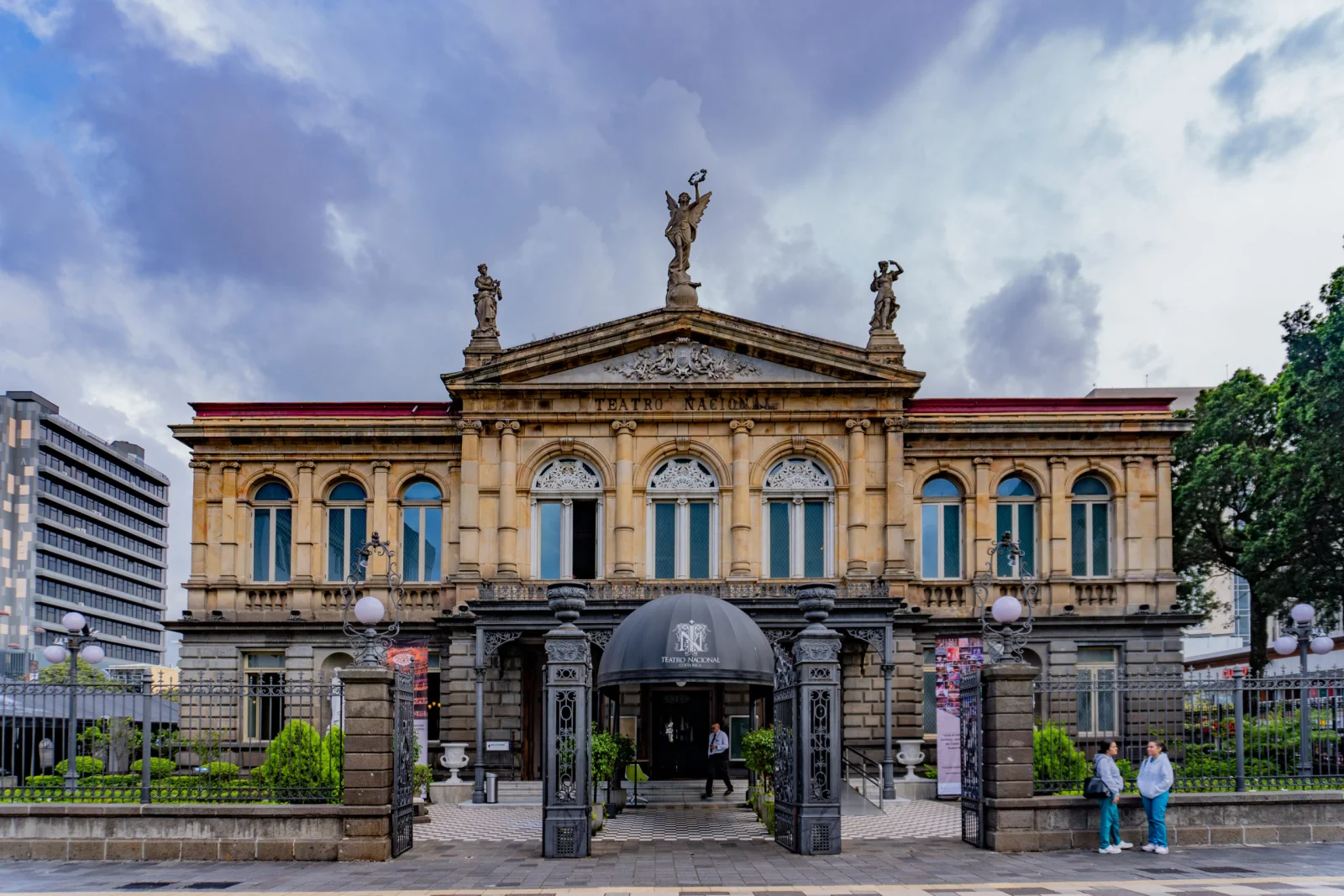
History and context
Construction took place from 1890 to 1897 with the involvement of Costa Rican professionals and European architectural influences. The theatre opened on 19 October 1897. Although coffee shaped the initial proposal, most construction costs came from a general import tax rather than exclusively from coffee growers.
Why this place matters
This is one of Costa Rica’s most recognized architectural and artistic works, yet its significance is also civic: it embodies debates about education, cultural access, national representation and public finance. Continuous use as a theatre prevents it from becoming a building frozen in the past.
What to notice during your visit
- The foyer and staircases with marble, sculpture and ornament from multiple sources.
- The main auditorium, designed around performance and acoustics.
- The Allegory of Coffee and Bananas and other artworks that invite discussion of the nation’s image.
- The chance to pair a heritage visit with a performance from the current programme.
How to plan your visit
- Check the official programme and tours because performances can restrict access to some spaces.
- Purchase tickets only through National Theatre channels.
- Choose a guided visit and arrive early if architecture is your priority.
- Confirm photography and accessibility rules before entering.
Access and location
The theatre stands beside the Plaza de la Cultura and Juan Mora Fernández Plaza in a well-connected pedestrian and bus area. Downtown traffic and parking make public transport the practical choice.
Conservation and responsible visits
Do not touch paintings, sculpture, textiles or decorated surfaces. Follow staff directions in restricted areas and remember that the building remains an active stage and workplace.
Keys to interpreting the site
What image of the nation did the National Theatre seek to build?
Public project
Coffee shaped the debate, but general import taxes financed most construction, complicating the myth of a theatre paid only by coffee growers.
Artistic programme
Painting, sculpture, ornament and spatial hierarchy communicated progress, European taste and national representation.
Living theatre
Heritage extends beyond the building: performances, stagecraft, restoration and audiences keep its meaning active.
Suggested visit sequence
- 01
Begin with the façade and plaza to read its civic-centre setting.
- 02
On the official visit, compare lobby, stairways, foyer and auditorium.
- 03
If attending a performance, treat it separately from the heritage tour and follow event timing.
How to combine this visit
Plaza de la Cultura, the Gold Museum and historic downtown form a compact walking route.