
Planning data
Practical visit facts
- Route or distance
- Heliconias: 610 m; Las Coladas: 1.7 km; El Ceibo: 2.3 km. Ask which combination is open and how much the return adds.
- Suggested time
- 3–5 hours including the transfer from La Fortuna and stops.
- Admission and booking
- Admission at the park; SINAC lists card payment at the entrance. Confirm current conditions.
- Available facilities
- Drinking water, toilets, parking, viewpoints and a lunch area; full services in La Fortuna.
Distances, hours, access and facilities may change because of weather, maintenance or operating decisions. Always confirm with the official source before leaving.
Content reviewed on July 28, 2026Practical decision
Is it right for your trip?
Choose Arenal Volcano National Park to walk through forest and geologically recent eruptive material—not to reach the crater, see active lava or obtain a guaranteed clear viewpoint. The area works best with two or three nights in La Fortuna and one main activity per day. On a one-night stay, road transfers can consume too much of the visit.
Official trails: how they differ
Heliconias Trail · 610 m
SINAC’s shortest listed option. It is described as flat, narrow and vegetation-covered, with possible cone views. It suits a shorter approach, although the surface remains natural and damp.
Las Coladas Trail · 1.7 km
A relatively flat route toward the lava-flow viewpoint, relating the cone, lake and Tilarán range. The final volcanic-rock area can be uneven, slippery and more exposed to sun.
El Ceibo Trail · 2.3 km
A relatively flat forest alternative centred on a large ceibo tree. It offers an ecological counterpoint to the lava and illustrates forest recovery after eruptions.
How to choose a route
Prioritise Las Coladas for geology and broad views; choose El Ceibo for forest, shade and nature observation. Heliconias works for a shorter visit. Published lengths refer to individual trails, not necessarily your total walk, so ask at the entrance which combination is open and how much the return adds.
How much time to allow
Allow 3–5 hours for the drive from La Fortuna, admission, an unhurried walk and viewpoint stops. The official page currently lists daily hours from 8:00 to 16:00, but hours, payment and open trails must be checked before departure. Avoid booking another fixed-time activity immediately afterwards.
Visibility, rain and terrain
No season guarantees a clear cone. Mornings are often a practical choice, but rain and cloud can develop at any time in this humid region. Wetter periods increase mud and moisture on roots and rock, while dry spells bring more sun exposure on the lava. A cloudy visit still has value for forest and geology.
Mobility and real accessibility
SINAC describes the main trails as flat or relatively flat, but that does not mean universally accessible. Expect natural ground, moisture, roots and volcanic rock; the lava viewpoint includes uneven terrain. Wheelchair users, families with strollers and visitors with limited mobility should ask the park which section is genuinely passable that day.
Common mistakes on this visit
- Following a private reserve name on a map and assuming it is the national-park entrance.
- Attempting an informal climb: it is prohibited and exposes visitors to unstable ground, rockfall and gas.
- Scheduling the park, waterfall, bridges, hot springs and a transfer to another destination on the same day.
- Leaving valuables visible in a vehicle or arriving without identification and an accepted payment method.
- Treating a cloud-covered cone as a failed visit; forest, lava and lake are central to the experience.
A realistic three-day stay
- Day 1: arrive in La Fortuna, stock up and keep the afternoon light after the road transfer.
- Day 2: national park in the morning and one low-intensity afternoon activity such as hot springs or a short town visit.
- Day 3: choose the waterfall, hanging bridges, lake or a private reserve according to mobility and weather rather than attempting all of them.
How it formed and works
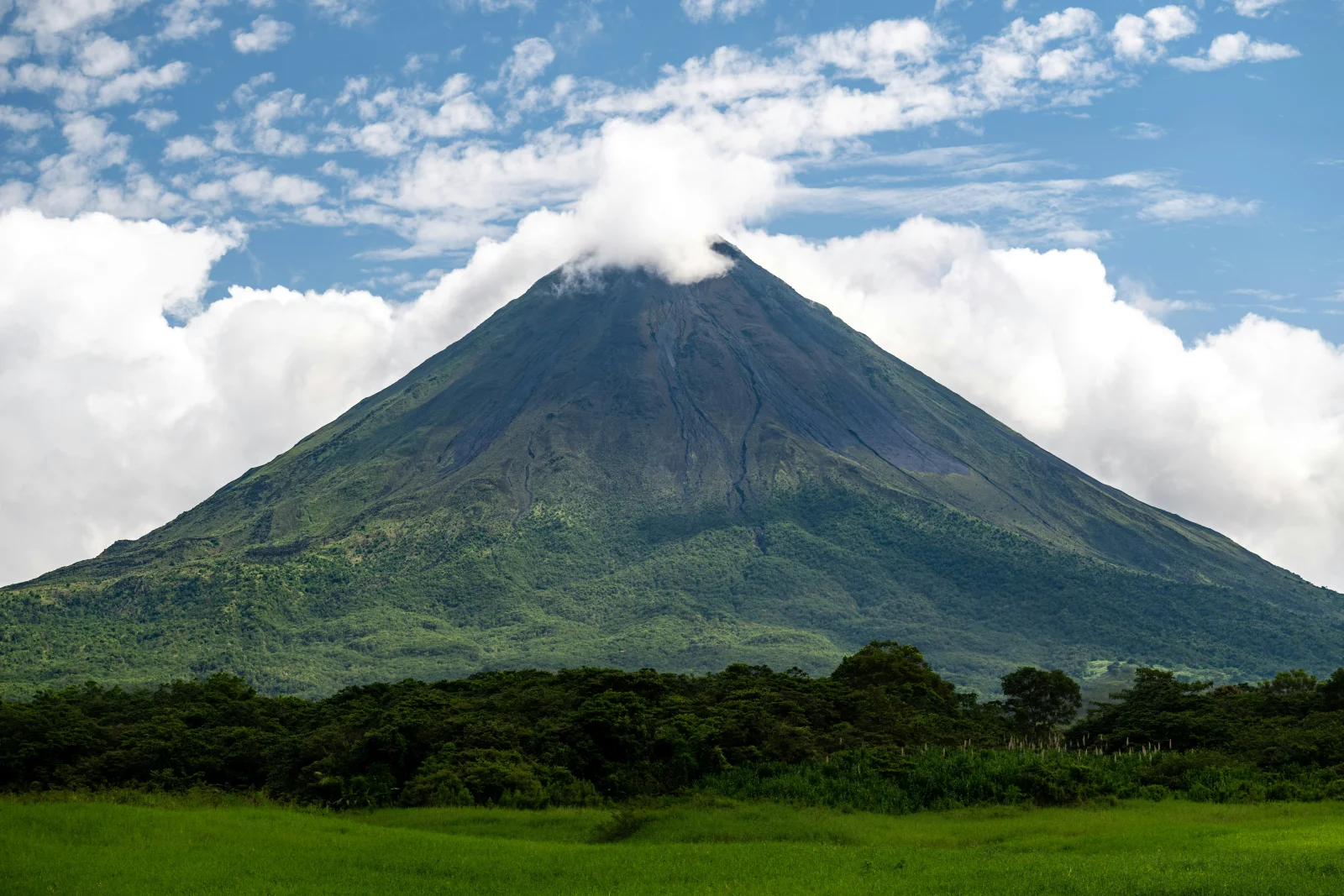
Arenal is a young, conical stratovolcano built from lava, ash, blocks and other eruptive material. The eruption of 29 July 1968 opened three explosion craters on its western flank and began more than four decades of activity. RSN documents an extensive 1968–2010 lava field; authorised trails allow visitors to interpret those flows without climbing the cone.
Landscape and ecosystems
The park connects rainforest, secondary forest recolonising volcanic ground, dark lava and views toward Lake Arenal and the Tilarán range. This is not an accessible crater experience like Poás or Irazú: the visit is about walking around the base and seeing how forest returns. Humidity and cloud can hide and reveal the cone several times during one visit.
Eruptive and human history
Before 1968, many local people knew it as Cerro Arenal and considered it inactive. The eruption destroyed Pueblo Nuevo and Tabacón and caused a human tragedy that transformed nearby communities. Surface activity declined markedly in 2010, with the final lava advances reported around 2010–2011, but scientific monitoring continues and the cone remains outside authorised visitor routes.
What you will find
- Coladas Trail across geologically recent eruptive material.
- El Ceibo Trail and its centuries-old rainforest tree.
- Combined views of the cone, Lake Arenal and rainforest landscape.
Plan your visit
- The park has separate sectors and approaches; confirm the intended entrance before driving.
- SINAC lists daily opening, but currently states that online sales are not available for this park.
- Distinguish the national park from private reserves and hot-spring resorts around La Fortuna.
Access and logistics
Park entrances are outside downtown La Fortuna and require road transport. Rain can affect unpaved stretches. Download directions because mobile service can be inconsistent.
Safety and volcanic activity
Climbing the cone or crater on unauthorized routes is prohibited. This is unstable volcanic terrain in a protected area; illegal-climb videos do not make it safe or lawful.
Hours, rates, trails and conditions can change without notice. Official park information and staff instructions always take precedence.What to explore nearby
- La Fortuna is the main base for accommodation, restaurants, supermarkets and transport, but the official park entrance is outside town.
- La Fortuna Waterfall, hanging bridges, private reserves and hot-spring resorts are separate experiences with independent access, fees and management.
- Lake Arenal, El Castillo, Nuevo Arenal and Tilarán extend the trip into rural and water landscapes without duplicating the national-park experience.
Specific sources and editorial review
Operational information reviewed 31 July 2026. Confirm hours, trails, payment and road access with SINAC before travelling.