
Planning data
Practical visit facts
- Route or distance
- About 600 m from the visitor centre to the crater; Botos and forest circuits depend on opening.
- Suggested time
- 1.5–3 hours if additional trails are open.
- Admission and booking
- Booking required through SINAC’s official system; published last admission is 14:00.
- Available facilities
- Guarded parking, toilets, first aid and non-potable water; carry drinking water.
Distances, hours, access and facilities may change because of weather, maintenance or operating decisions. Always confirm with the official source before leaving.
Content reviewed on July 28, 2026Practical decision
Is it right for your trip?
Choose Poás for a direct active-crater experience with a short walk and straightforward access from the Central Valley. Do not choose it for a long mountain hike, guaranteed visibility or unlimited time at the viewpoint. It can work very well for families and first-time visitors, but the visual outcome depends on cloud, gas and safety decisions.
Official trails: how they differ
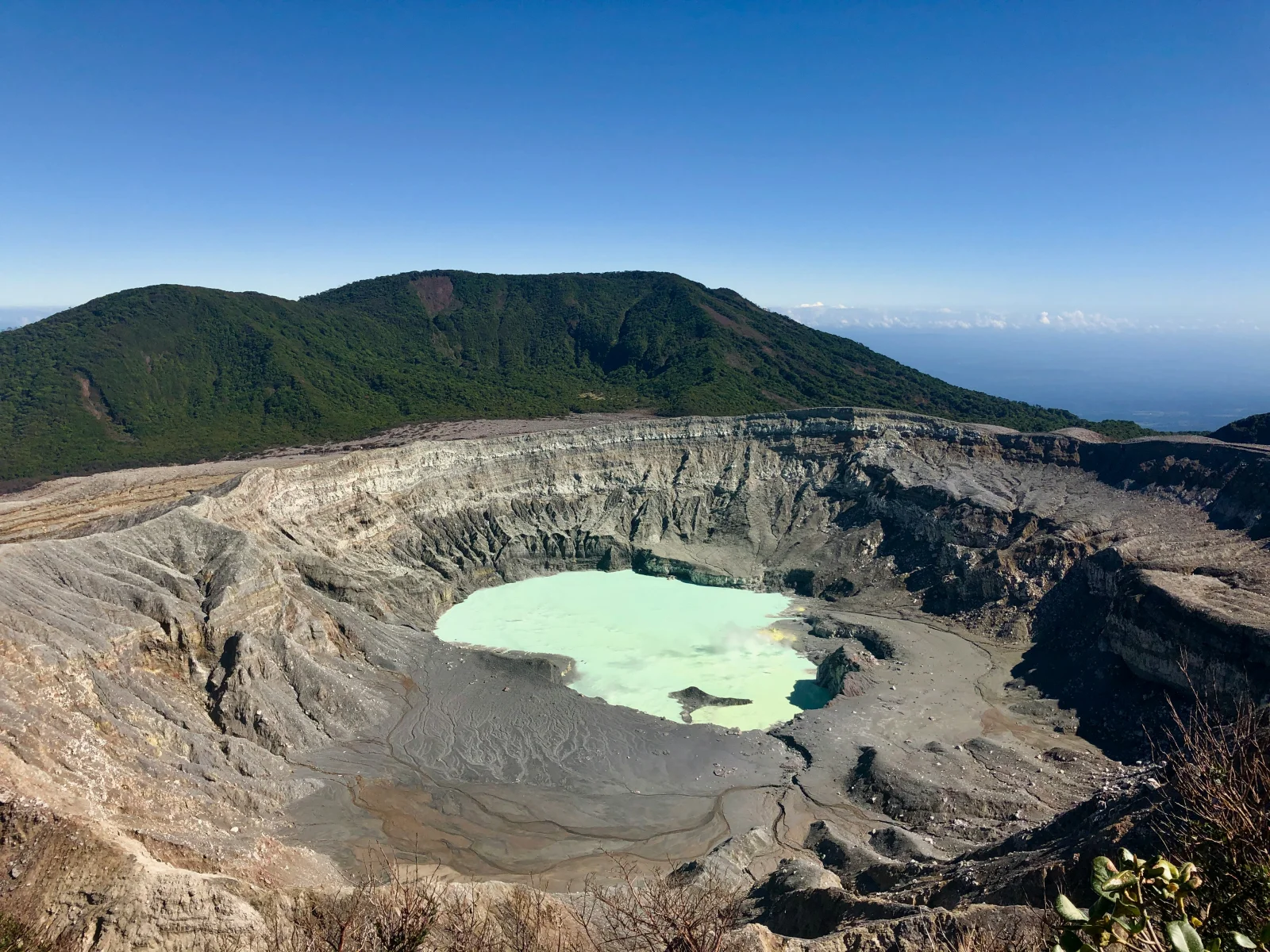
Visitor centre–main viewpoint · about 600 m
The essential route and core active-crater experience. It is short and paved, but high elevation, cold, wind or respiratory sensitivity can make it feel more demanding.
Botos Lagoon trail and viewpoint
An extension to an older crater containing a cold lake about 400 m wide. Treat it as an optional addition only when SINAC has opened it; volcanic activity, maintenance or protocols may change availability.
Canto de Aves and forest circuit
Park planning documents identify Canto de Aves—historically about 1.3 km—and connecting forest paths. Never assume the entire network is open; ask which circuit is authorised that day.
How to choose a route
The main crater is the core of every visit. Add Botos or the forest circuit only if open and appropriate for your time and mobility. If cloud covers the crater, it may move, but respect the dwell time set by staff and do not obstruct the viewpoint while waiting indefinitely.
How much time to allow
Book an official time slot and allow 1.5–3 hours inside if additional trails are open. SINAC currently lists daily opening from 8:00 to 16:00, last admission at 14:00 and online reservation as mandatory. Arrive early because mountain roads, fog and stops around Poasito can add time.
Visibility, rain and terrain
SINAC lists an average temperature near 12°C and high annual rainfall. Carry a light waterproof and warm layer even when Alajuela is sunny. Mornings are often the most practical visibility attempt, but no view is guaranteed. Wind matters too: it can clear cloud or direct gas toward the viewpoint and trigger restrictions.
Mobility and real accessibility
The principal access and viewpoint use paved infrastructure and accessibility adaptations, but elevation, slope, cold and possible evacuation still matter. Botos and other sections may not offer the same conditions or may be closed. Contact the park if you use a wheelchair, need assistance or frequent rest, or must limit gas exposure.
Common mistakes on this visit
- Arriving without a SINAC reservation or buying a supposed ticket from an unofficial intermediary.
- Booking too tightly after a flight, rental-car collection or a long drive from the coast.
- Confusing the national-park entrance with private farms, cafés, gardens or viewpoints along the Poás corridor.
- Relying on park water for drinking: SINAC identifies it as non-potable, so arrive with your own supply.
- Crossing barriers, ignoring alarms or remaining against staff instructions for a photograph.
- Treating a cloud-covered crater as misleading advertising; visibility is natural and not guaranteed by admission.
How to organise a half-day visit
- Before departure: check opening, the latest volcano bulletin, reservation, road status and the mountain forecast.
- Inside the park: enter in your slot, follow the briefing and see the crater first; then decide whether to add Botos or forest according to openings.
- Afterwards: choose one coherent extension—lunch in Poasito, Fraijanes or one corridor activity—and avoid stacking too many fixed-time bookings.
How it formed and works
Poás is a complex stratovolcano in the Central Volcanic Range. Its summit contains the active main crater, Botos or Fría Lagoon and the Von Frantzius cone. The main crater is approximately 1.32 km wide, and its hydrothermal system can generate gas, fumaroles, acid rain, ash and steam-driven or phreatomagmatic eruptions. A calm appearance for a few minutes therefore does not mean inactivity.
Landscape and ecosystems
At roughly 2,700 m elevation, wind, cold, drizzle and volcanic gas create an environment unlike the farms and towns below. Low resistant vegetation dominates near the crater, while cloud forest, ferns, epiphytes and dwarf forest occur farther away. Botos is an old crater containing a cold forest-ringed lake, providing a geological and ecological contrast with the active crater.
Eruptive and human history
Poás alternates relatively quiet periods with eruptive phases. The 1910 eruption raised a major ash column, while activity in 2017 reshaped the crater floor, destroyed the dome and forced the park to close. Reopening introduced controlled entry, evacuation routes, shelters and protocols; later episodes confirm that conditions may change after a booking is made.
What you will find
- Main-crater viewpoint and high-elevation landscape.
- Botos Lagoon, a cold lake in an older crater, when its trail is open.
- Cloud forest, gas-adapted vegetation and occasional Central Valley views.
Plan your visit
- Purchase a timed ticket through SINAC’s official system.
- Arrive before the assigned time; access and dwell time may be controlled for safety.
- Mornings often offer better visibility, but a clear crater view is never guaranteed.
Access and logistics
Paved roads approach from Alajuela and Poás or through Vara Blanca and Poasito. Dense fog is possible. Do not confuse the national park with private viewpoints in the surrounding area.
Safety and volcanic activity
Poás is active. SINAC may close viewpoints or the park because of gas, eruptions, wind or operations. Follow staff directions, remain on authorized routes and check status that same day.
Hours, rates, trails and conditions can change without notice. Official park information and staff instructions always take precedence.What to explore nearby
- Poasito, Fraijanes and San Pedro de Poás add food, agricultural products and rural context without making every stop compulsory.
- Vara Blanca and the Sarapiquí corridor offer cloud forest and waterfalls, but require realistic allowance for curves, fog and road time.
- Downtown Alajuela, Sarchí or Grecia work better as a separate cultural extension than as a rushed chain of stops.
Specific sources and editorial review
Operational information reviewed 31 July 2026. Poás activity can change quickly: confirm opening, trails, reservation and restrictions with SINAC and read the latest scientific bulletin before travelling.